
Blog · 12 July 2026
Can you move a piano yourself without a specialist?
The honest answer depends on what kind of piano you have and what the move involves. A lightweight digital piano on a stand can often be moved by two careful adults with basic equipment. An upright, baby grand or grand is a different matter, and the risks are real enough to be worth thinking through carefully.
Digital pianos: usually manageable
A digital piano or Clavinova typically weighs between 40 and 80 kilos and disassembles into the keyboard unit, the stand and the pedal board. Two people who are used to moving furniture can move a digital piano safely over short distances and across ground-floor rooms. For stairs or a vehicle move, it is worth using proper moving straps and having a third person to guide.
Upright pianos: the weight and balance problem
An upright piano typically weighs between 200 and 300 kilos. The weight is not distributed evenly: most of it is concentrated in the cast-iron frame at the back of the instrument, which means the piano is top-heavy and wants to tip backwards. Moving an upright without a purpose-built skid board and proper strapping technique risks the piano toppling, with serious injury and damage as the likely result.
The casework of an upright piano is also more fragile than it looks. The thin veneer on the case panels, the music desk, the legs and the pedal assembly are all vulnerable to impact. Getting a 250-kilo instrument through a doorway without catching the case on the frame is harder than it sounds.
Grand pianos: do not attempt this yourself
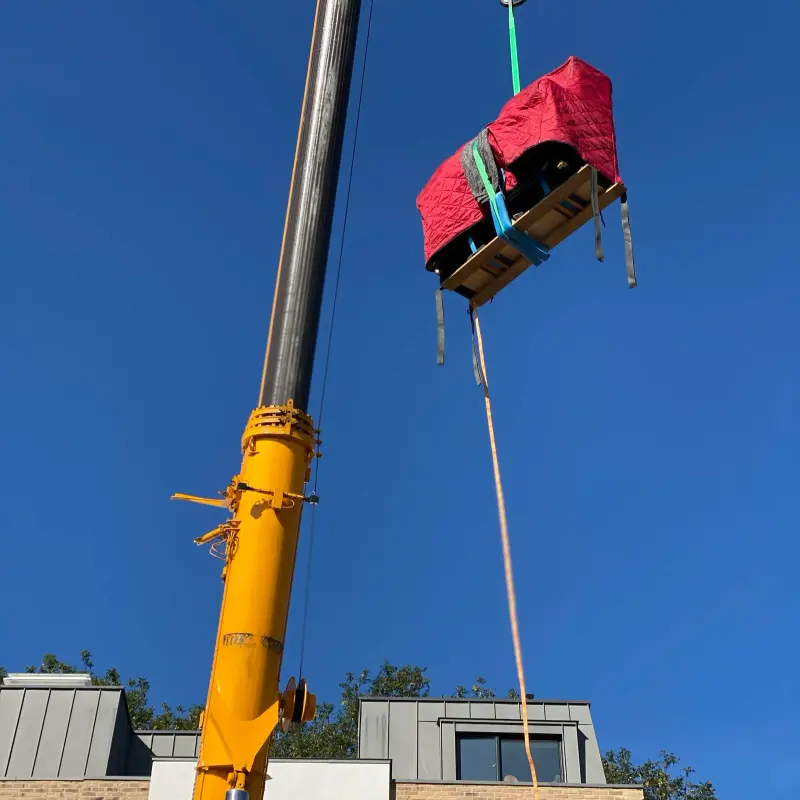
A grand piano cannot be moved safely without specialist equipment and a trained crew. The piano must be stood on its side on a padded skid board, which requires first removing the legs and pedal lyre. The body is then unevenly balanced and very heavy, with the soundboard and the polished rim in direct contact with the board. Without the right technique and kit, this process risks buckling the legs, cracking the soundboard or toppling the instrument entirely.
Beyond the piano itself, the floor, doorframes and stairways in the building can all sustain significant damage from an uncontrolled move. Period properties with original floors, painted walls and narrow staircases are particularly vulnerable.
The insurance question
If you move a piano yourself and it is damaged, your home insurance is unlikely to cover the loss. Home insurance typically covers accidental damage caused by an unforeseen event, but a self-inflicted move gone wrong is not usually covered. Transit insurance on a specialist piano move would cover damage that occurred during handling.
When it might make sense to do it yourself
- Moving a lightweight digital piano across ground-floor rooms in the same building
- Sliding an upright a short distance within one room, on its castors, on a protected floor
- Moving a keyboard or stage piano that disassembles into manageable parts
When to use a specialist
- Any move that involves stairs, steps or a lift
- Any move from one building to another, even across the street
- Any move involving a grand or baby grand piano
- Any move involving an antique, high-value or fragile instrument
If you are weighing up the cost, an instant fixed price at book.pianospeed.com takes two minutes and gives you the real number for a specialist move. Piano moves start from £125. PianoSpeed is rated 4.9 out of 5 on Trustpilot from 77 reviews. Call 020 7164 0000 if you want to talk through the job before you decide.
Book your move in 2 minutes
When it has to arrive perfectly, there is no second choice.
Get an instant quote★★★★★ Rated 4.9 out of 5 on Trustpilot from 77 reviews