
Blog · 17 August 2026
Piano weight guide: how heavy is an upright, grand or baby grand
An upright piano weighs between 150 kg and 270 kg, depending on its height and make. Baby grands start at around 275 kg and can reach 350 kg or more. Full-size grands range from roughly 350 kg to 500 kg, and a concert grand can exceed 500 kg. If you are planning a piano move and wondering whether your floor, your stairs or your building can cope, this guide gives you the real numbers and what they mean in practice.
Piano weight matters most for three things: whether a specialist crew and vehicle are needed (yes, always), how stairs and access affect the job, and whether the destination floor can take the load. The specialist piano movers at PianoSpeed handle every weight category. The instant online quote at book.pianospeed.com prices access, stairs and floor level automatically so you see a fixed price before you book.
How heavy is an upright piano
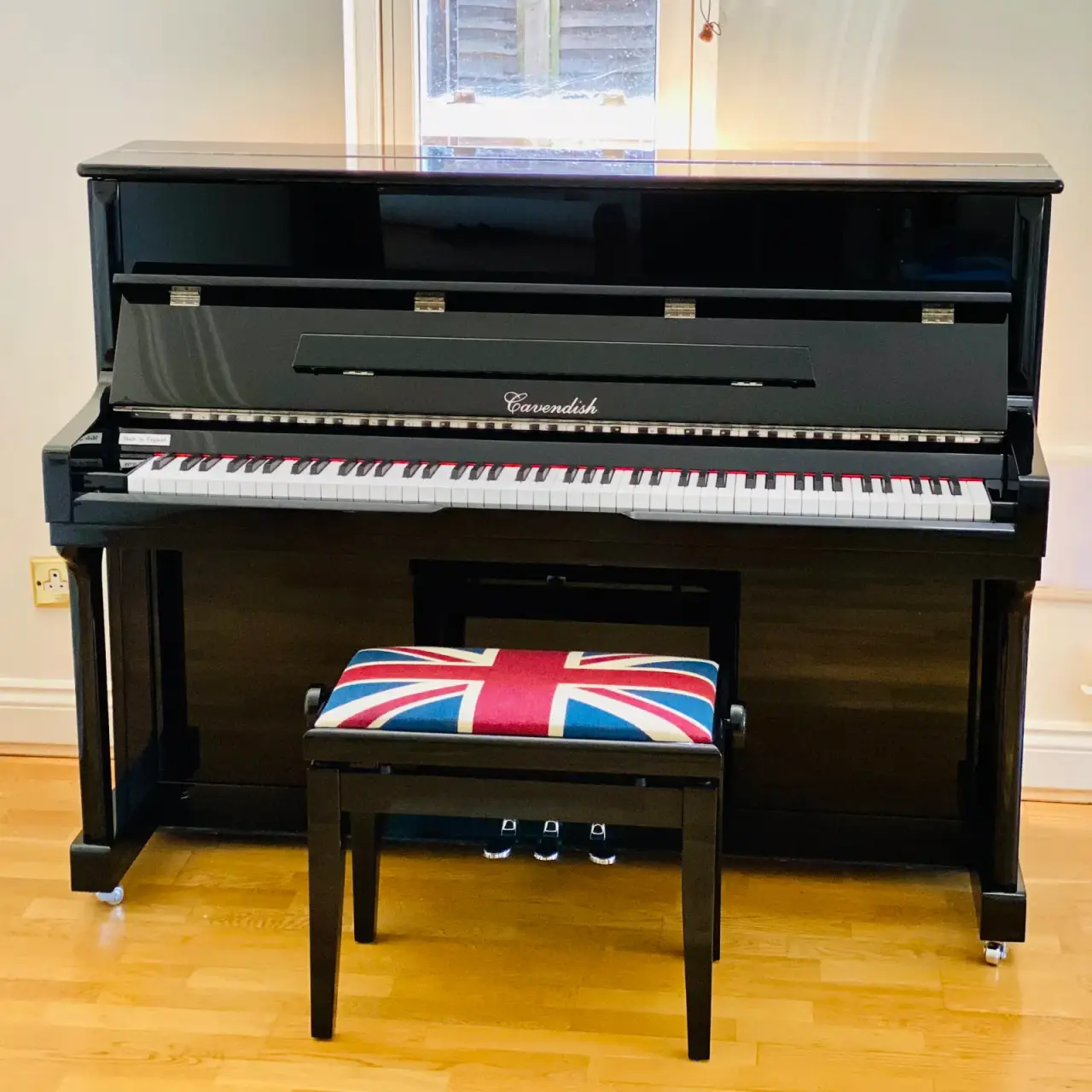
Upright pianos vary significantly by height because the cabinet, frame, strings and cast iron plate all increase with height. As a practical guide:
- Small studio uprights (88 to 100 cm tall): roughly 150 to 190 kg
- Mid-size uprights (100 to 120 cm tall): roughly 190 to 230 kg
- Full-size uprights (120 to 132 cm tall): roughly 230 to 270 kg
A common instrument like the Yamaha U1 (121 cm) weighs around 210 kg. A larger full-size upright such as a Bechstein B 132 (132 cm) is closer to 260 kg. These figures give a useful starting point, but the weight of your specific piano can usually be found in the manufacturer's specification sheet or on the instrument's serial number record.
Even the lightest upright at 150 kg is too heavy for two ordinary people to carry safely, and far too heavy to carry up stairs without specialist equipment. Piano-trained crews use a padded skid board and triple-thickness fitted transit covers, not standard removal blankets, because the instrument needs to stay upright and fully supported throughout the move. If you are looking for specialist upright piano movers, PianoSpeed covers London, Greater London, Surrey and the GB mainland.
How heavy is a baby grand piano
Baby grands typically weigh between 270 kg and 350 kg. The range reflects the variation in length (usually 148 to 165 cm), the thickness of the cast iron plate, and the density of the timber used in the rim construction.
A Yamaha GB1K (151 cm), often chosen as a first grand for a domestic room, weighs around 280 kg. A Steinway Model S (155 cm) is closer to 310 kg. These figures matter when assessing whether a piano can go on an upper floor, a question covered in more detail below.
On any grand, including a baby grand, the legs and pedal lyre are removed before the move begins. Each leg and the pedal assembly goes into an individual padded bag. The body travels on a specialist padded skid board, strapped securely in the vehicle. Handling a baby grand as a single unit without removing the legs is done incorrectly, regardless of the piano's weight.
How heavy is a grand piano
Grand pianos from around 170 cm to 220 cm in length typically weigh between 350 kg and 500 kg. A Steinway Model B (211 cm) weighs around 425 kg. A Yamaha C5 (200 cm) is close to 360 kg. At these weights, a specialist vehicle with a tail lift and a piano-trained crew of at least three is not optional. It is the only safe way to move the instrument.
The cast iron plate in a grand piano of this size is itself over 100 kg. Anything improvised at this weight introduces a serious risk of structural damage to the instrument or injury to the people attempting the move. PianoSpeed's grand piano moving service covers London, Greater London, Surrey and the full GB mainland.
How heavy is a concert grand piano
Concert grands, typically 270 cm to 280 cm in length, are the heaviest instruments PianoSpeed moves. A Steinway Model D weighs around 480 kg. A Bosendorfer 280VC is approximately 510 kg. A Fazioli F308 (308 cm, the largest production grand made) is close to 690 kg, making it one of the heaviest pianos in regular use.
At these weights, venue access needs careful advance planning. The route from the loading point to the stage must be assessed for doorway widths, floor loadings, ramps and the availability of a lift or a manual route. If you are arranging a concert grand delivery to a venue in London or across the UK, call 020 7164 0000 to talk through the access before booking online.
What piano weight means for your floor
A common concern when a piano is going to an upper floor is whether the floor can take the weight. For most UK domestic properties, uprights and baby grands are well within normal floor loading capacity. UK building regulations for residential floors specify a minimum imposed load of approximately 150 kg per square metre. An upright at 210 kg, resting on its base along roughly 140 cm, distributes its weight more like a loaded bookcase than a concentrated point load.
Grands and baby grands rest on three casters, which concentrate the weight through three relatively small contact points rather than distributing it across the floor. In practice, placing castor cups (rigid discs that spread the load over a larger area) under each leg is standard advice from piano technicians. If you are placing a grand piano in a first-floor flat or an older Victorian property, asking a structural engineer or your building's surveyor to confirm the floor capacity is worthwhile for any instrument above 400 kg. For most domestic uprights and baby grands, this is not necessary.
Weight, stairs and access
Stairs are where piano weight combines with geometry to create the most demanding part of many moves. A 230 kg upright on a straight staircase with a decent landing at each end is a manageable specialist job. The same piano on a tight turn, in a stairwell with a low ceiling, or in a building with no suitable parking point for the vehicle is a different challenge.
Access including stairs and floor level is priced automatically in the online quote at book.pianospeed.com. The quote engine takes the floor level and the presence or absence of a lift into account. Stairs on a piano move are always chargeable: there is no stair allowance built into a base price. The fixed price you see in the quote includes the stairs so you know the full cost before you confirm the booking. If your access is unusual, for example a very tight turn, a spiral staircase or an external hoist being required, describe it in the booking notes and the team will confirm the plan.
How heavy is a Clavinova or digital piano
Digital pianos and Clavinovas are considerably lighter than acoustic instruments. A full-size Yamaha Clavinova CLP series instrument typically weighs between 75 kg and 120 kg depending on the model. A stage piano or a lightweight slab-style digital instrument can be under 30 kg.
At these weights, moving the instrument without a specialist is physically possible in some situations, but the risk of damage to the piano or injury on stairs is still real. PianoSpeed's digital piano and Clavinova moving service uses the same fully insured, fixed-price approach as an acoustic move. The instrument is wrapped and protected throughout. Get a fixed price at book.pianospeed.com.
Common questions about piano weight
How do I find the exact weight of my piano?
Look up the manufacturer's specification sheet using the brand, model name and serial number. The serial number is usually stamped on the metal plate visible when you lift the lid, or inside the case. Manufacturers including Yamaha, Steinway, Kawai, Bechstein and Bosendorfer publish weight data for their instruments. Your local piano technician will often know the weight of common models.
Does a heavier piano cost more to move?
Weight alone does not set the price. The online quote at book.pianospeed.com is based on the instrument type (upright, baby grand, grand, concert grand), the collection and delivery addresses, and the floor level and access at each end. A heavier instrument on a straightforward ground-floor route may cost the same as a lighter one with a difficult upper-floor access. The fixed price shown in the quote is the price you pay.
How many people does it take to move a piano?
A minimum crew of two piano-trained specialists is used for an upright. A baby grand typically requires three. A full grand or concert grand is a larger crew job, set by the instrument size and the access conditions. Crew size is factored into the fixed price for every move.
Can a piano be too heavy for a domestic floor?
For most UK domestic properties, uprights and baby grands are within normal structural capacity. Very large grands above 450 kg going to an upper floor in an older building with variable joist sizes are worth checking with a structural engineer. This is a practical precaution rather than a reason to avoid the move: a brief consultation confirms whether castor cups are sufficient or whether any floor reinforcement is needed before delivery.
Is a digital piano treated differently from an acoustic piano on a move?
Yes, in terms of handling technique. A digital piano has no cast iron plate and is not tuning-sensitive in the way an acoustic instrument is, so the restrictions around tilting and orientation are different. However, the external case and electronic components still need careful handling, and stairs carry the same physical risks regardless of whether the instrument is acoustic or digital. The PianoSpeed team handles both types.
Piano moves start from £125. Get your fixed price for a specialist piano move at book.pianospeed.com, or call 020 7164 0000. PianoSpeed London Limited, 71-75 Shelton Street, Covent Garden, London WC2H 9JQ. Rated 4.9 out of 5 on Trustpilot from 77 reviews. Part of the Pianospeed Group.
Book your move in 2 minutes
When it has to arrive perfectly, there is no second choice.
Get an instant quote★★★★★ Rated 4.9 out of 5 on Trustpilot from 77 reviews