
Blog · 29 November 2026
How to sell your piano: the practical guide for owners
Selling a piano is a practical project with several moving parts: working out what it is worth, deciding where to list it, managing viewings, and arranging for it to leave your home once it has sold. Most owners underestimate the logistics and overestimate the value. This guide works through each stage so you can plan the sale properly and avoid the most common hold-ups.
What is your piano actually worth?
The honest answer is that most second-hand pianos are worth less than their owners expect. A new piano depreciates quickly, and most instruments sold on the second-hand market in the UK have been used for years, may not have been tuned regularly, and are competing with a large supply of similar instruments at similar prices.
To find a realistic asking price, search completed listings on eBay for the same make and model, look at current stock on sites such as Pianodrome, Besbrode, or your nearest piano dealer, and subtract the cost of a fresh tuning since most buyers will expect one. If your piano is a well-known name in good condition, a local dealer may offer a part-exchange valuation which gives you a useful anchor even if you do not take it up.
German brands in good condition, Steinway, Bechstein, Grotrian-Steinweg, Bluthner, hold their value better than mass-market uprights. Japanese instruments from Yamaha and Kawai hold value reasonably well if they are under 30 years old. Very old uprights of unknown origin or basic brands often have more sentimental value to the seller than market value to buyers.
Three ways to sell a piano
Private sale
Listing the piano yourself on eBay, Gumtree, or Facebook Marketplace gives you the widest reach and the best chance of achieving your asking price, but it also means managing enquiries, arranging viewings, and negotiating with buyers who may not understand what they are looking at. Expect some time-wasters and low offers. The key questions every buyer should ask and that you should answer honestly are: when was it last tuned, has it been in a damp room, and have any keys or hammers been repaired.
Make clear in the listing who is responsible for collection. Most buyers of private pianos at the lower end of the market expect to arrange their own piano movers or a man-with-a-van, but misunderstandings about this are extremely common and can stall a sale at the last moment.
Selling to a dealer
A piano dealer will buy your instrument for resale, typically at a price well below what you might achieve privately, but the transaction is fast and they arrange collection. If you have a good instrument in a central location, some dealers will take it on a sale-or-return basis: your piano sits in their showroom, they sell it and take a commission. This can achieve a higher price than a quick buy-out but takes longer.
Contact two or three dealers before accepting an offer. Most will ask for the make, model, serial number (usually stamped on the iron frame above the strings, or printed on the action), and photographs of the instrument and any damage. A dealer buying speculatively will price in a margin for tuning, cleaning and any action work, so do not be offended by a low first offer.
Auction
Established salerooms handle pianos in their regular contents auctions, and specialist music auctions handle higher-value instruments. Auction suits pianos where condition or value is uncertain: the market decides the price. Charges typically include a buyer's premium (paid by the buyer) and a vendor's commission (paid by you, usually 10 to 20 percent of the hammer price), plus a fixed fee for the lot. For a piano worth under a few hundred pounds, vendor's fees may leave you with very little. For a rare or historic instrument, auction can outperform a private listing.
The saleroom arranges collection from your address. For a specialist piano auction, you will need a specialist firm to deliver the instrument to the sale venue. PianoSpeed regularly handles piano deliveries to auction houses and salerooms across London and the UK mainland.
Getting the piano ready to sell
A piano in poor visual condition will attract lower offers regardless of how it plays. Before listing, clean the keys with a damp cloth (avoid anything abrasive on ivory), dust the interior, and have the piano tuned if the pitch has dropped significantly. A piano that sounds reasonable during a viewing sells faster and at a better price than one that sounds out of pitch. The cost of a single tuning is modest and typically pays for itself in the sale price.
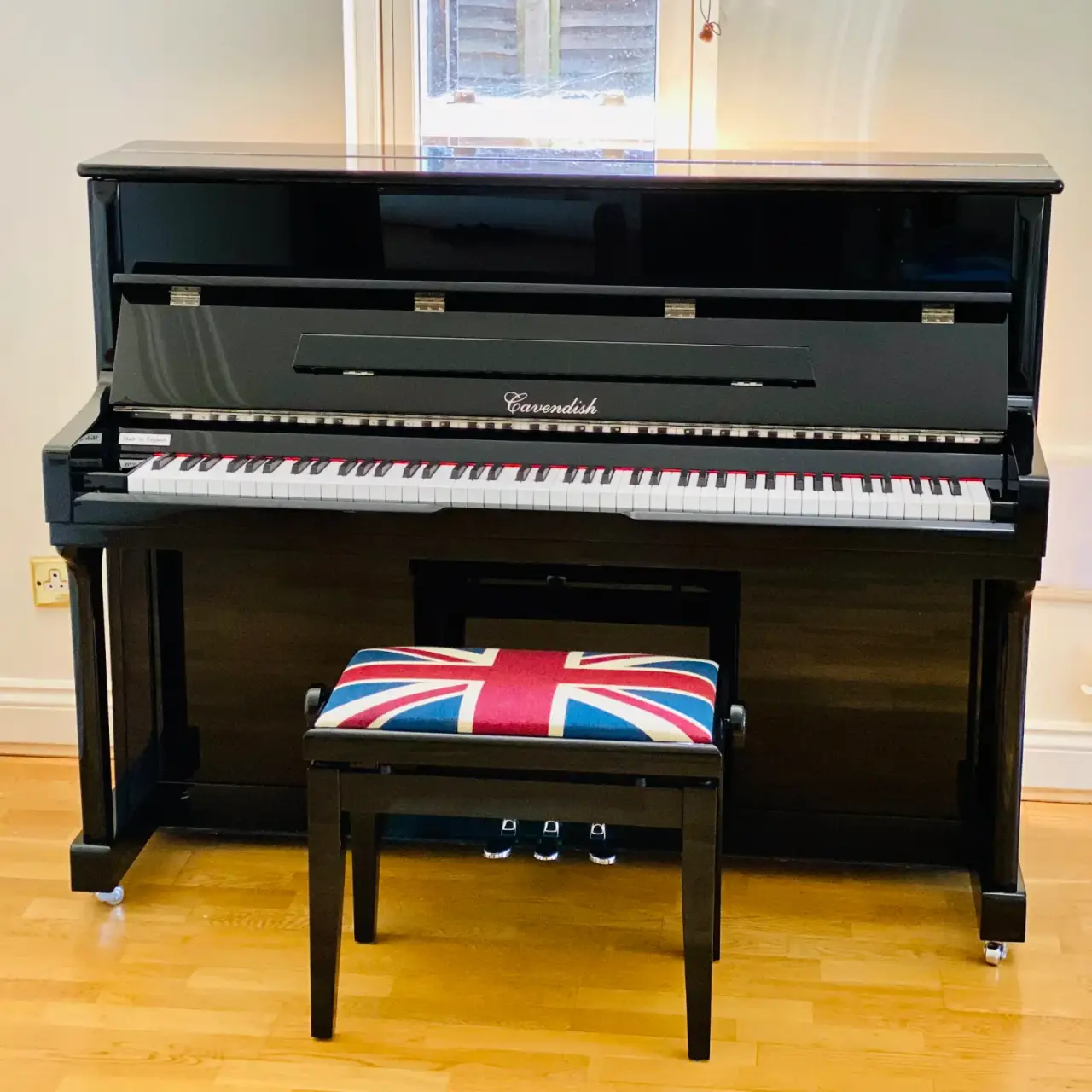
Take clear photographs in good natural light. Include a straight-on front shot showing the full case, a close-up of the keyboard, a shot of the pedals, and the maker's name on the fallboard. If there is any damage to the case, photograph it honestly: buyers who discover damage on viewing that was not shown in the listing are more likely to pull out or renegotiate sharply.
The collection or delivery question
This is where most private piano sales get complicated. The buyer finds the instrument online, agrees a price, and then discovers that arranging a specialist to collect it costs more than they expected, or that the person they had lined up cannot manage the access. It is worth addressing this directly in your listing so buyers know what they are committing to.
If you are selling locally, some buyers will arrange their own specialist movers. If the buyer is in another part of the country, PianoSpeed covers the full UK mainland, and an instant quote at book.pianospeed.com will give the buyer a fixed price for collection and delivery in minutes. Sharing that link with a prospective buyer removes one of the main reasons sales fall through at the final hurdle.
Piano moves start from £125. Stairs at either address are chargeable, and the online quote accounts for this automatically when the buyer enters the access details.
What to do when the piano does not sell
Some pianos do not sell, or sell only after a long wait at a low price. If you are struggling to find a buyer, you have several practical options.
- Donate to a school, community centre, music charity or place of worship. Many organisations will arrange collection at their cost if the piano is in playable condition.
- Contact a piano recycling charity such as the Fazioli Foundation's piano donation schemes, the Piano Adoption Scheme, or a local music trust.
- Move the piano into climate-controlled storage while you wait for the right buyer. Self-storage facilities are not suitable for pianos because of humidity and temperature swings; the guide on this site about piano storage explains the alternatives.
- If the piano is genuinely unplayable and beyond economic repair, a licensed waste contractor can arrange disposal. Expect to pay for this, not receive money.
Questions people often ask
Can a buyer collect a piano in a standard hire van?
Sometimes, for a lightweight digital piano or a small upright on a flat route. For an acoustic upright or any grand, the instrument needs a properly equipped specialist crew with fitted transit covers, a padded skid board and the right rigging equipment for any stairs. A hire van without specialist equipment is a common source of piano damage and of injuries to the people trying to move it.
Do I need to have the piano tuned before selling it?
You are not obliged to, but a piano that plays in tune is significantly easier to sell. Buyers hear the pitch drop during a viewing and immediately factor in the cost and inconvenience of a tuner, often renegotiating the price downward. A single tuning can protect several hundred pounds of sale value.
What paperwork does a piano sale need?
In most private sales, none. For higher-value instruments, a simple written agreement confirming the make, model, serial number, agreed price and collection date protects both sides. If the piano has an existing insurance valuation certificate, passing that to the buyer is a useful courtesy and helps them arrange cover for the move.
Can I sell a piano that is in a tenanted property?
Yes, if you own the instrument. The tenant may need to give access for viewings and for the collection crew. It is worth coordinating with them in advance so there are no surprises on the day, and so the crew has parking arranged and correct access times confirmed.
Arrange the collection once you have a buyer
Once a buyer has agreed and paid, the simplest next step is to book the move online. At book.pianospeed.com you can get a fixed price for collection from your address and delivery to the buyer, or collection only if the buyer is arranging their own onward move. The quote asks for the piano type, both postcodes, and the access at each address, including floors and stairs, and returns a price with available dates. For a sale you have worked hard to close, using a specialist is the straightforward way to make sure the instrument arrives intact and the transaction finishes well.
Book your move in 2 minutes
When it has to arrive perfectly, there is no second choice.
Get an instant quote★★★★★ Rated 4.9 out of 5 on Trustpilot from 83 reviews