
Blog · 23 September 2026
Piano moving day etiquette: what owners can do to help the crew
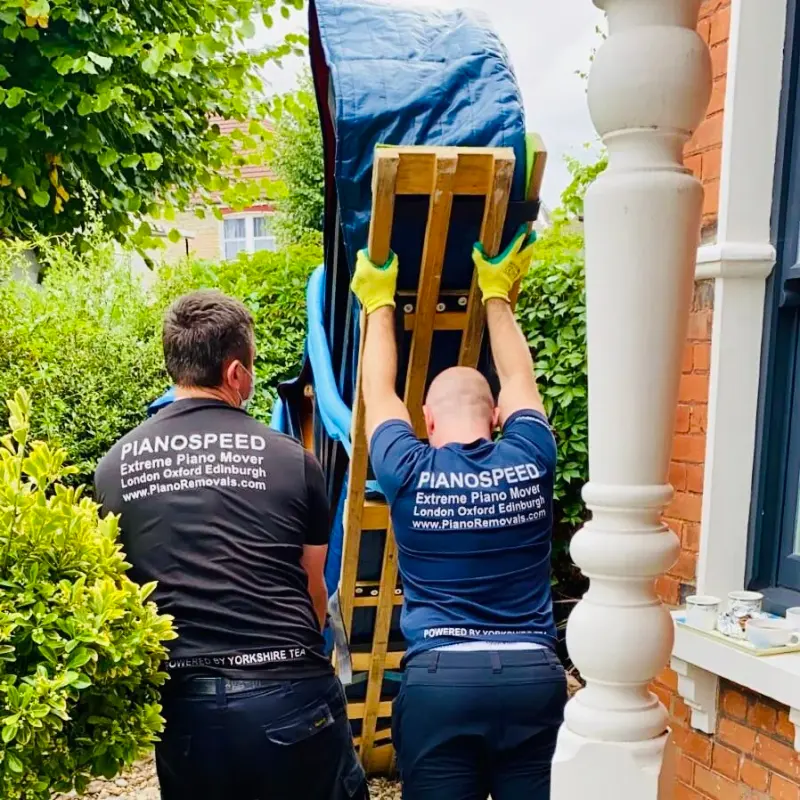
The single most useful thing an owner can do on piano moving day is have the route clear, the access details accurate and a decision made about where the piano will end up. A specialist crew from PianoSpeed handles everything from wrapping and carrying to loading and positioning; your job is to make sure they can get on with it. The practical steps below take most owners about twenty minutes to work through. For a fixed price that covers the piano, both addresses and stairs, get an instant quote at book.pianospeed.com.
Before the day: decisions and access
Decide where the piano is going before the day begins. The most avoidable delay on any piano move is an owner who is still deciding between two rooms when the crew arrives with a fully wrapped instrument ready to carry in. Walk the destination room yourself: check the piano fits, check the door width is wide enough, identify whether the piano will be against an external wall (preferable for stability and humidity) or in the centre of the room. Mark the final position with a piece of furniture or tape if it helps.
Give accurate access details at booking and update the team before the day if anything changes. A lift that broke over the weekend, a corridor that is now blocked by a renovation, a parking restriction that came into force since you booked: call 020 7164 0000 or update the booking so the crew can plan accordingly. Access details that differ from what was logged at booking do not usually stop the job, but they do take time to work through on site, and stairs and floor levels affect the fixed price. The instant quote at book.pianospeed.com prices stair access automatically when you enter the floor level at each address.
Arrange parking close to both front doors
A crew carrying a wrapped piano from a third-floor flat does not want to cover fifty metres of pavement to reach the vehicle. The closer the van can park to the entrance at each address, the shorter the carry in the open air and the less time the instrument spends in weather it was not designed for.
For London and Surrey jobs, check whether the street has permit parking restrictions. A single yellow line is often usable during certain hours; a double yellow or a loading bay with restricted hours is not. If you cannot arrange an informal spot, contact your local council about a temporary parking suspension. It is worth the effort for a large instrument. Let the crew know what to expect when you confirm the booking.
Clear the route from the piano room to the street
Walk the full route yourself the evening before the move: from the room the piano is in, through any corridors, down any stairs, through the front door and to the kerb. Remove anything that narrows the route or creates a trip hazard. Bikes in the hallway, coats on hooks at head height, loose rugs on a staircase landing, a side table at the bottom of the stairs: any of these slows the carry and increases the risk of contact damage to walls or the instrument.
If there are doors along the route that tend to swing shut, prop them open before the crew arrives. A door closing onto a moving piano is a distraction the crew does not need. The crew will check hinges themselves if a doorway is tight, but a route that is clear from the start is a better starting point than one they have to adapt.
Be present and available at both addresses
Someone needs to be at the collection address when the crew arrives and at the delivery address when the piano is carried in. At collection, the crew will confirm the route and access before touching the piano. At delivery, they will ask where the piano is going before they start the carry in. Neither question can be answered by a neighbour or a letting agent who has not been briefed.
If collection and delivery are at different addresses on the same day, arrange a trusted person at each location who knows the access details and the destination room. Make sure that person has your number in case a question comes up mid-move. The crew will call ahead when they are on their way to the delivery address so the person there has a few minutes notice.
Tell the crew about access challenges when they arrive, not later
If there is something about the route you did not mention at booking, say so when the crew arrives, before any moving has started. A stair that is narrower than it looks in photos, a hallway table that cannot be moved, a step down into the rear garden where the van is parked: anything that changes the job should come up at the start, not when the piano is halfway down the stairs. The crew are specialists and they will adapt, but they need the information as early as possible to do that well.
Do not wait to see if the crew notices. They will do a route walk when they arrive, but they are looking at what they can see; they cannot know about the loose step you always remind visitors about unless you tell them.
Keep children and pets out of the route
A piano crew managing a heavy instrument in a corridor or on a staircase is working under controlled load. A child who appears at the bottom of the stairs or a dog who runs into the hallway can cause a sudden stop or change of direction that is dangerous for the crew and bad for the piano. Keep children and pets in a room that is not on the route for the duration of the carry, and keep that door closed.
The carry from room to vehicle, and from vehicle to room at the delivery address, is not a long process. Most piano removes take between two and four hours door to door. The route needs to be clear for only a portion of that time. Ask the crew when they arrive how long the carry is likely to take and plan around that window.
Let the crew do the lifting
Do not try to help with the physical carry. A specialist piano crew carries instruments professionally and has planned the lift, the grip and the positioning of the team for each stage of the route. An extra pair of hands from someone not part of that plan, at a doorway or on a staircase, introduces a variable the crew has not accounted for. It also puts you in a load-bearing role that is not covered by PianoSpeed's insurance.
The thing owners most often want to help with is getting the piano out of a tight spot. If something is genuinely wrong, the crew will tell you. If the carry looks difficult from the outside, that is usually because moving pianos is inherently difficult, and the crew is doing exactly what needs to be done.
After the move: positioning and sign-off
Once the piano is in the room, tell the crew where you want it before they start positioning. Moving a fully wrapped grand across a room twice is not what the crew is there for, and it is not as quick as it sounds when the instrument weighs three hundred kilos. If you are still unsure on the day, say so before they carry it in and take thirty seconds to decide; that is better than repositioning after the fact.
At sign-off, the crew will ask you to confirm the condition of the instrument. Check the piano is where you want it, that the castors are settled and, for a grand, that the legs are firm. Note anything you want to flag. Most jobs complete without issue, but the sign-off is the right moment to raise a concern, not a week later.
Common questions about piano moving day
Do I need to tell the crew anything about the piano itself?
It helps to mention any known quirks: a lid that does not close fully, a castor that sticks, or a previous repair that left a vulnerable joint. The crew wraps and moves the piano as they find it; prior information lets them handle those points with extra care.
Should I remove items from the top of the piano?
Yes, before the crew arrives. Framed photos, ornaments, sheet music, metronomes: remove them all and pack them separately. The crew will not move loose items placed on the piano as part of the job, and anything left on the lid when it is wrapped will either be dislodged or have to be removed at that stage anyway.
Is it helpful to have coffee ready for the crew?
It is a kind gesture and always appreciated, but offer before the job starts or at the end, not while the carry is in progress. A crew in the middle of a staircase carry needs to focus, not stop for a hot drink.
Do stairs need to be cleared even if there is a lift?
If there is a working lift, the crew will use it where the piano fits. A lift large enough for a piano, particularly a grand on a grand board, is not as common as owners assume. Tell the booking team the internal dimensions of the lift when you book; if the piano fits, the crew will use it. Stairs are priced separately regardless of lift availability, as access and floor level both affect the quote.
What should I do if the piano cannot fit through a door on the day?
The crew will tell you. A specialist crew does not force a piano through an access it cannot safely pass through. The first option is usually removing the door from its hinges. Beyond that, alternative routes or a return visit may be needed. The booking team at 020 7164 0000 handles these conversations.
Get your move booked
Piano moves start from £125. The instant quote at book.pianospeed.com covers the piano, the floor level at both addresses and a confirmed date. The quote takes two minutes. For anything more complex, call 020 7164 0000. PianoSpeed is rated 4.9 out of 5 on Trustpilot from 77 reviews. PianoSpeed London Limited, 020 7164 0000, 71-75 Shelton Street, Covent Garden, London WC2H 9JQ. Part of the Pianospeed Group.
Book your move in 2 minutes
When it has to arrive perfectly, there is no second choice.
Get an instant quote★★★★★ Rated 4.9 out of 5 on Trustpilot from 77 reviews